
Call for Proposals is Now Open
Magna Publications invites proposals for 20-Minute Mentor Sessions, 60-Minute Concurrent Sessions, Poster Sessions, and Reverse Panel Sessions for the 2027 Teaching Professor Conference, June 11–13, 2027, in Atlanta, Georgia
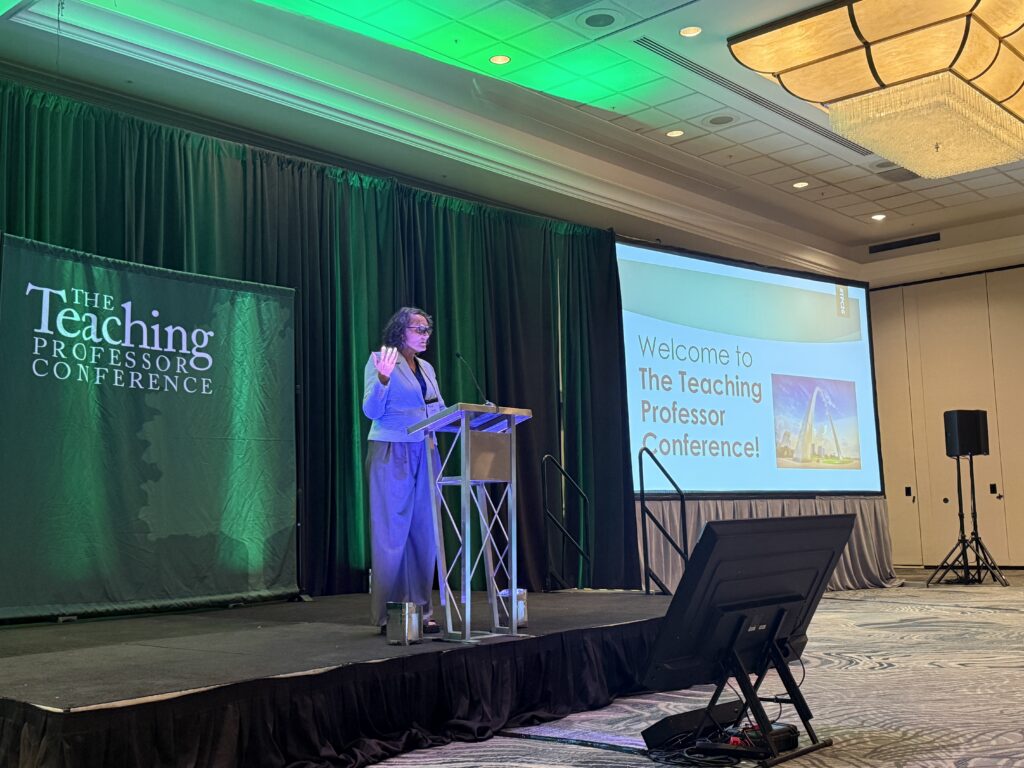
The Teaching Professor Conference provides a thought-provoking and engaging forum for educators across disciplines and experience levels to share practical strategies, research, innovative practices, and ideas that advance teaching and learning in higher education. Whether you are a new or returning presenter, we encourage you to consider sharing your expertise, experiences, and ideas with a community of educators committed to improving student learning.
Deadline for Submissions is Monday, December 28, 2026
Confirmation of accepted proposals will be sent by March 8, 2027.
Proposal Submission Deadline
December 28, 2026
Acceptance Notifications sent by
March 8, 2027
Conference
June 11–13, 2027
Session Formats


60-minute Concurrent Sessions
Concurrent Sessions are 60-minute, interactive presentations that explore a teaching and learning topic, strategy, practice, or research finding in depth. Strong sessions combine evidence-informed content with meaningful opportunities for participants to reflect, discuss, practice, or apply what they are learning.

20-Minute Mentor Sessions
20-Minute Mentor sessions tackle one specific teaching or learning challenge and provide participants with focused, practical, evidence-informed guidance they can apply in their own teaching. These fast-paced sessions should move quickly from the challenge → what the evidence tells us → what faculty can do about it.

Poster Sessions
Poster Sessions showcase teaching and learning research, innovations, practices, or emerging ideas in a visual, conversational format. Presenters share their work through a poster display while engaging attendees in one-on-one or small-group discussion.

reverse panel Sessions
Reverse Panels are 30-minutes and turn the traditional conference panel around. Rather than listening to a panel of experts, attendees become the panel. A moderator introduces a timely teaching and learning issue, poses thought-provoking questions, and invites perspectives from across the room. Moderators should have expertise in the proposed topic and demonstrate an ability to facilitate conversation.
Conference Tracks
Preparing Your Course and Curriculum
These sessions promote innovative course design strategies, curriculum development, and ways to align learning outcomes with evolving academic standards.
Sessions in this track cover topics such as:
Learner-centered course design
Backward design
Designing courses for critical thinking, reflection, collaboration, and motivation
Active learning
Writing and aligning goals, objectives, and learning outcomes
Gamification
Using artificial intelligence (AI) as a course preparation tool
Educational Technology & Artificial Intelligence
Sessions in this track focus on the latest educational technologies, digital tools, and platforms that enhance learning experiences and foster student engagement, including artificial intelligence (AI) tools.
Sessions in this track cover topics such as:
Pedagogical research that supports technology tools and technology integration
Generative AI in writing, discussion, and grading
Accessible and adaptive technology
An example of technology tools used in class for professional or personal development
The Online Classroom
These sessions are for educators who seek to optimize their online courses, improve student engagement, and ensure quality teaching practices in the digital environment.
Sessions in this track cover topics such as:
Maximizing your learning management system (LMS) features and settings
Course structure, file naming, organization
Creating and uploading resources including video, graphics, and documents
Humanizing/personalizing your course
Flipped classroom tips and ideas
Online course design best practices
Student Engagement
These sessions address one or all of the dimensions of student engagement including behavioral, emotional, or cognitive.
Sessions in this track cover topics such as:
Instructional strategies promoting engagement
Practices supporting engaging classroom climate
Promoting broadly engaged participation and discussion
Classroom-based engagement activities
Assessment & Feedback for Learning
These sessions focus on assignments, assessments, and grading practices, including strategies that measure students’ accomplishment of course objectives and learning outcomes.
Sessions in this track cover topics such as:
Tests and assignments
Grading systems and criteria
Self-assessment and peer-assessment
Rubrics and feedback
Using AI in assignments, assessments, feedback, and grading
Inclusive Teaching
This track focuses on strategies to create inclusive classrooms that address diversity, equity, belonging, and social justice, ensuring all students feel valued, seen, and supported.
Sessions in this track cover topics such as:
Creating inclusive learning climates
Universal design for learning (UDL)
Addressing implicit bias in the classroom
Promoting belonging and social justice
Equity-minded practices
Supporting underrepresented and marginalized students
Building DEI competencies
Student Success Beyond the Classroom
Sessions in this track focus on real-world skills and experiential learning within higher ed curricula. Explore how to create meaningful connections between academic content and practical skills that students need to succeed in their careers and lives beyond graduation.
Sessions in this track cover topics such as:
Career readiness and internships
Building resilience and mental health awareness
Faculty advising and mentoring
Grant writing and fundraising
Service learning and community engagement
Global, ethical, civic engagement
Academic integrity and professional ethics in real-world application
Developing emotional intelligence (EI)
Faculty Success & Career Development
This track is designed to support faculty at different stages of their academic careers, whether they are just starting out or are experienced professionals looking to revitalize their work and prepare for new challenges. Ultimately, focusing on key aspects of faculty development, and providing insights on professional development, leadership skills, and navigating academic career paths.
Sessions in this track cover topics such as:
Classroom Management
Building effective mentoring relationships
Balancing teaching, citizenship, research, and scholarship
Revitalizing your teaching
Preparing for leadership and administration
Professional networking and collaboration
Maintaining work-life balance and renewal
Rubric for Proposals
All submissions go through a blind, peer-review process by our advisory board. Members use the following rubrics to evaluate proposals. Because this is a blind review process, anonymity must be maintained in the proposal or it will be automatically excluded. (Please do not include your name or institution within the session information.)
Rubric for 20-Minute and 60-Minute Session
Relevance
Addresses ideas, topics, or practices that are highly relevant and significant to teaching and learning at the university level.
Moderate
2 – 3
Poor
1
Excellent
4 – 5
Evidence
Cites previous scholarly work and integrates theory and/or quantitative or qualitative assessment data. The presentation does not rest on the presenter’s experience.
Poor
1
Moderate
2 – 3
Excellent
4 – 5
Action
Offers content applicable to a variety of disciplines and campus sizes by sharing innovative and creative thinking. Proposal covers new ground or is a significant advancement or application of well-documented practice.
Poor
1
Moderate
2 – 3
Excellent
4 – 5
Appropriate
The session proposal is likely to accomplish the stated outcomes. It is appropriate for the track selected by the presenter.
Poor
1
Moderate
2 – 3
Excellent
4 – 5
Presentation
The session is engaging and interactive. It includes the thoughtful use of active learning and engagement activities synergistic with the proposed content and session goals.
Poor
1
Moderate
2 – 3
Excellent
4 – 5
Rubric for 90-Minute Poster Session
Appropriate
Is the topic appropriate for this conference?
Poor
1
Moderate
2 – 3
Excellent
4 – 5
Audience
Is the topic relevant to a broad range of disciplines, students and/or institutional settings?
Poor
1
Moderate
2 – 3
Excellent
4 – 5
Overall Proposal Quality
Writing, organization, originality.
Poor
1
Moderate
2 – 3
Excellent
4 – 5
Rubric for Reverse Panel Sessions
Relevance
Addresses a timely, meaningful teaching and learning issue that is likely to resonate with higher education faculty across disciplines, roles, or institutional settings.
Poor
1
Moderate
2 – 3
Excellent
4 – 5
Discussion Potential
The proposed topic and questions present complexity, competing perspectives, or questions without an obvious single answer and is well suited for participant-driven discussion.
Poor
1
Moderate
2 – 3
Excellent
4 – 5
Facilitation
The moderator demonstrates a thoughtful plan for encouraging participation, drawing out differing viewpoints, maintaining respectful dialogue, and keeping the conversation focused and productive.
Poor
1
Moderate
2 – 3
Excellent
4 – 5
Moderator Expertise & Context
The moderator demonstrates sufficient knowledge or experience with the topic to provide useful context, ask meaningful follow-up questions, and help participants examine the issue more deeply without dominating the conversation.
Poor
1
Moderate
2 – 3
Excellent
4 – 5
Submit Your Proposal
Selected presenters are responsible for their own conference registration, lodging, travel arrangements, and duplication of session handouts. Selected presenters receive the $799 lowest registration rate regardless of deadline.