
Plenary Sessions
Opening and closing plenary sessions feature renowned experts who bring fresh ideas and actionable insights to your teaching. Join us Friday to kick off the conference and leave Sunday inspired and ready to put new ideas into practice.
Undisciplined: How Great Teaching Breaks the Rules and Re-Enchants the Classroom
Friday, June 5 | 5:15 - 6:30 pm
Student disengagement is often treated as a problem to be solved with better tools, tighter policies, or trendy techniques. This plenary argues the opposite: the antidote to disengagement is not innovation at the level of technique, but transformation at the level of being. By drawing a clear distinction between performance and presence, Michael Wesch shows how our fixation on performance—shaped by fear, scripting, self-protection, and the desire to be liked—quietly drains the life from our classrooms and from ourselves. Presence, by contrast, is responsive, relational, and alive in the moment—it is risky, cannot be faked, and is precisely what students recognize when learning becomes real.
Drawing on decades of award-winning teaching and ethnographic fieldwork from campfires in the rainforests of New Guinea to temples in India, Vietnam, and Korea, Wesch shows how great teaching has always resembled a campfire: a shared space of curiosity, honesty, and meaning-making. This plenary reclaims “the great thing” at the heart of every discipline—the big human questions and hard-earned insights that first drew us into our fields—as the center of transformative teaching.
Attendees will be invited to confront the barriers to presence, reconnect with their real why, and rediscover the joy of intellectual life and teaching. Emphasizing how preparation and passion outside the classroom translate into presence within it, this talk offers a manifesto for the re-enchantment of the academy and a call to become “undisciplined” in service of what matters most.
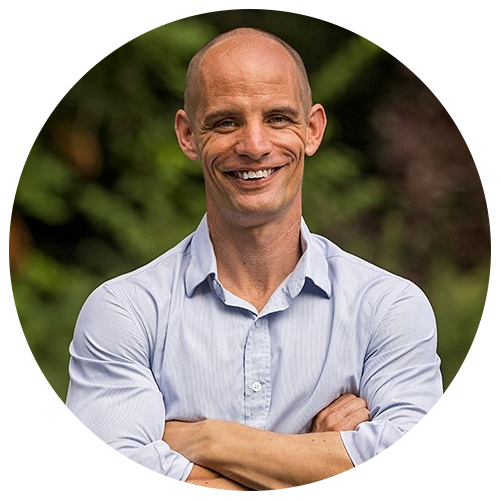
Michael Wesch, PhD
Michael Wesch, PhD
Michael Wesch is Professor of Cultural Anthropology at Kansas State University and a recipient of the US Professor of the Year award. Once dubbed “the explainer” by Wired magazine, his work on digital culture has been viewed by millions. The New York Times listed him as one of 10 professors in the nation whose courses “mess with old models,” noting that they “give students an experience that might change how they think, what they care about or even how they live their lives.”
Drawing on over 20 years of ethnographic fieldwork and cross-cultural wisdom, he explores how people cultivate meaning, community, and sacred presence in everyday life. This work also informs his teaching: a call to re-enchant the academy by returning to the big human questions at the heart of our disciplines and reimagining the classroom as a site of wonder, intellectual courage, and radical presence.
AI Literacy and Liberal Education
Sunday, June 7 | 11:30 am - 12:45 pm
Artificial intelligence is transforming how we work, write, and think—perhaps faster than any change in human history. For educators, this disruption brings both challenge and opportunity. As AI reshapes what “average” work looks like, it opens the door to raising academic standards and reaffirming the central values of liberal education.
In this plenary, Bowen reframes AI literacy as a distinctly educational mission rooted in two staples of higher learning: asking sharper questions and critically evaluating answers. Reframing AI literacy in this way leads to a plethora of new assignments where educators can teach both writing and critical thinking while using AI in a way that raises standards rather than replacing human agency.
Together, we will explore how faculty across disciplines can position themselves and their students as “AI bosses”—directing, interrogating, and refining AI output rather than passively accepting it. Attendees will leave with practical ideas for assignments and teaching strategies that embrace AI’s potential while reinforcing the habits of mind that define higher education: curiosity, reflection, creativity, and rigor.

José Antonio Bowen, PhD, FRSA
José Antonio Bowen, PhD, FRSA
José Antonio Bowen has been leading innovation and change for over 45 years at Stanford, Georgetown and the University of Southampton (UK), as a dean at Miami University and SMU and as President of Goucher College. Bowen holds four degrees from Stanford and has written over 100 scholarly articles and books, including the Cambridge Companion to Conducting (2003), Teaching Naked (2012 and the winner of the Ness Award for Best Book on Higher Education), Teaching Change: How to Develop Independent Thinkers using Relationships, Resilience and Reflection (2021) and Teaching with AI: A Practical Guide to a New Era of Human Learning (2024; 2nd edn 2026) with C. Edward Watson.
Bowen has appeared in The New York Times, Forbes, The Wall Street Journal, has three TED talks, and he has presented more than 500 keynotes and workshops in 47 states and 22 countries around the world. In 2010, Stanford honored him as a Distinguished Alumni Scholar and in 2018 he was awarded the Ernest L. Boyer Award for significant contributions to American higher education and is now a senior fellow for the American Association of Colleges and Universities.