

The Insider's Guide to Better Teaching
The Teaching Professor is a trusted, highly informative publication dedicated to one purpose: delivering practical, research-informed ideas and insights for educators who are passionate about teaching.

Weekly Articles
Stay up to date with a fresh variety of inspiring and insightful articles focusing on the most up to date issues impacting teaching and learning.
Written by Humans
The Teaching Professor articles are not AI generated
Practical Solutions
Grounded in evidence and classroom experience

New Articles from The Teaching Professor











Browse the Archives
Your subscription includes access to thousands of thought-provoking, inspiring articles to answer your teaching and learning questions.
Thousands of Articles
Our archives host over 15 years worth of articles
Leading Voices in Teaching
Get insights from hundreds of experienced college professors and experts in teaching and learning.
Subscribe Today
Annual Subscription Plans
Annual subscription plans auto-renew annually.
Your Satisfaction is Guaranteed
If you are not satisfied with your subscription to The Teaching Professor, you may cancel at any time and receive a refund for the remainder of the unserved months or issues.
Campus Subscription
Get unlimited access for your whole campus
Small Campus:
Under 10,000 full time students
Medium Campus:
10,000-30,000 full time students
Large Campus:
30,000+ full time students
How Does a Group Subscription Work?
A group subscription is designed to give your faculty and staff access to the most valuable research and tools for the classroom.
With an online subscription, your institution can choose from several options that include:
Personal Account Access
Your institution purchases a license covering the entire campus community. The institution’s designated campus administrator will receive an authorization code to distribute to those interested in receiving the newsletter. These individuals establish their own personal accounts to gain access to the newsletter anytime, anywhere.
IP-Based Access
Your institution purchases a license covering the entire campus community. The subscription is available to anyone accessing it from a campus computer. Subscribers will not need to create a personal account to access the newsletter on campus. To access the newsletter off campus, subscribers will need to register with an authorization code.
Benefits of this option include:
- No username or password is required to access the newsletter on campus
- Anyone off campus who has an active subscription can also access it, but they need to use a username and password and must register with an authorization code.
Small Campus
<10,000 full time students
$1,899 / Year
Medium Campus
10,000-30,000 full time students
$3,399 / Year
Large Campus
30,000+ full time students
$3,999 / Year
If you are not satisfied with your subscription to The Teaching Professor, you may cancel at any time and receive a refund for the remainder of the unserved months or issues.
Sign Up for Updates
Receive free weekly email updates, including article summaries.
A paid Teaching Professor subscription is required to view the full articles.
Sign Up for Teaching Professor Email Updates!
Receive free weekly email updates that provide article summaries on pedagogically sound techniques and effective teaching strategies. A Teaching Professor subscription is required to view the full articles.
"*" indicates required fields
Meet the Editorial Team
The Teaching Professor editorial team carries on the publication’s mission of providing readers with evidence-based ideas and advice for improving learning in their courses. Look for their insight exclusively for The Teaching Professor subscribers.

Stephen L. Chew is a professor of psychology at Samford University in Birmingham, Alabama. Trained as a cognitive psychologist, one of his primary research areas is the cognitive basis of effective teaching and learning. Chew has worked to translate learning research for teachers and students. He developed a research-based framework of cognitive challenges that teachers must address to engender student learning. He is the creator of a groundbreaking series of YouTube videos for students on how to study effectively which have been viewed almost three million times. Chew is the recipient of multiple national awards for his teaching and research, including being named the 2011 Outstanding Master’s Universities and Colleges U.S. Professor of the Year by the Carnegie Foundation for the Advancement of Teaching. Chew serves as the chair of the National Institute on the Teaching of Psychology (NITOP).
Stephen L. Chew
Contributing Editor

Nichole DeWall is a professor of English at McKendree University in Lebanon, Illinois, where she teaches Shakespeare, medieval and early modern literature, drama, and composition courses. McKendree has recognized her with multiple awards, including the W. Norman Grandy Faculty Award and the Emerson Excellence in Teaching Award. DeWall has published extensively on representations of disease in Shakespeare’s drama and on teaching in higher education. Her writing has appeared in English: Journal of the English Association (Oxford UP), Journal of Excellence in College Teaching, and Representing the Plague in Early Modern England (Routledge). At McKendree, she serves as a provost fellow and director of the honors program. You can reach her at nbdewall@mckendree.edu.
Nichole DeWall
Contributing Editor

Regan A. R. Gurung is associate vice provost and executive director of the Center for Teaching and Learning and professor of psychological science at Oregon State University. He has published 16 books, most recently Thriving in Academia: Building a Career in a Teaching Focused Institution and A Pocket Guide to Online Teaching, and over 130 peer-reviewed research articles. He is winner of the American Psychological Foundation’s Charles L. Brewer Distinguished Teaching of Psychology Award and the CASE Wisconsin Professor of the Year Award, founding coeditor of APA’s journal Scholarship of Teaching and Learning in Psychology, and past president of the Society for the Teaching of Psychology and Psi Chi, the International Honor Society in Psychology.
Regan A. R. Gurung
Contributing Editor

Mays Imad is an associate professor of biology and equity pedagogy at Connecticut College. Previously, she taught for 14 years at Pima Community College in Tucson, Arizona, where she also founded the teaching and learning center. A Gardner Institute Fellow, an AAC&U Senior STEM Fellow, and a Mind & Life Institute Fellow, Imad researches the social determinants of wellbeing and their effects on students’ ability to learn and thrive. A nationally recognized expert on trauma-informed teaching and learning, Imad works with faculty across disciplines and institutions to promote inclusive, equitable, and contextual education—all rooted in the latest research on the neurobiology of learning.
Mays Imad
Contributing Editor
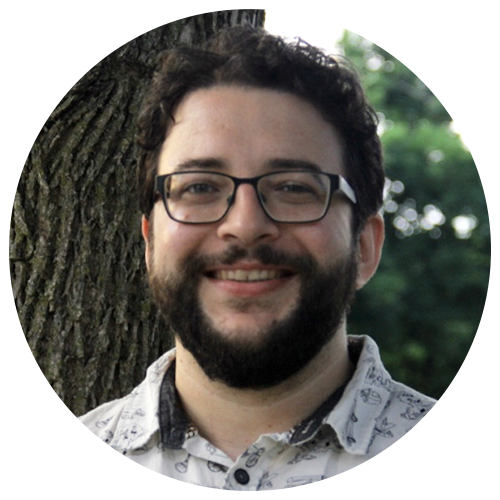
Jon Crylen edits The Teaching Professor and Academic Leader, reviewing manuscripts, working with authors on revisions, and managing both publications’ websites. He holds a PhD in film studies from the University of Iowa (UI) and, prior to joining Magna, taught undergraduate film courses at UI and Coe College. As both an editor and a former educator, Jon is committed to helping college faculty and administrators advance the cause of learner-centered teaching.
Jon Crylen
Managing Editor
The Teaching Professor (ISSN 2578-9899) is published by Magna Publications Inc., 2718 Dryden Drive, Madison, WI 53704. SKU: EPTPAA.